The Real Cost of an Intervention in Raleigh: Rates, Insurance, and Family ROI
Written by: Recovered Life Editorial Staff
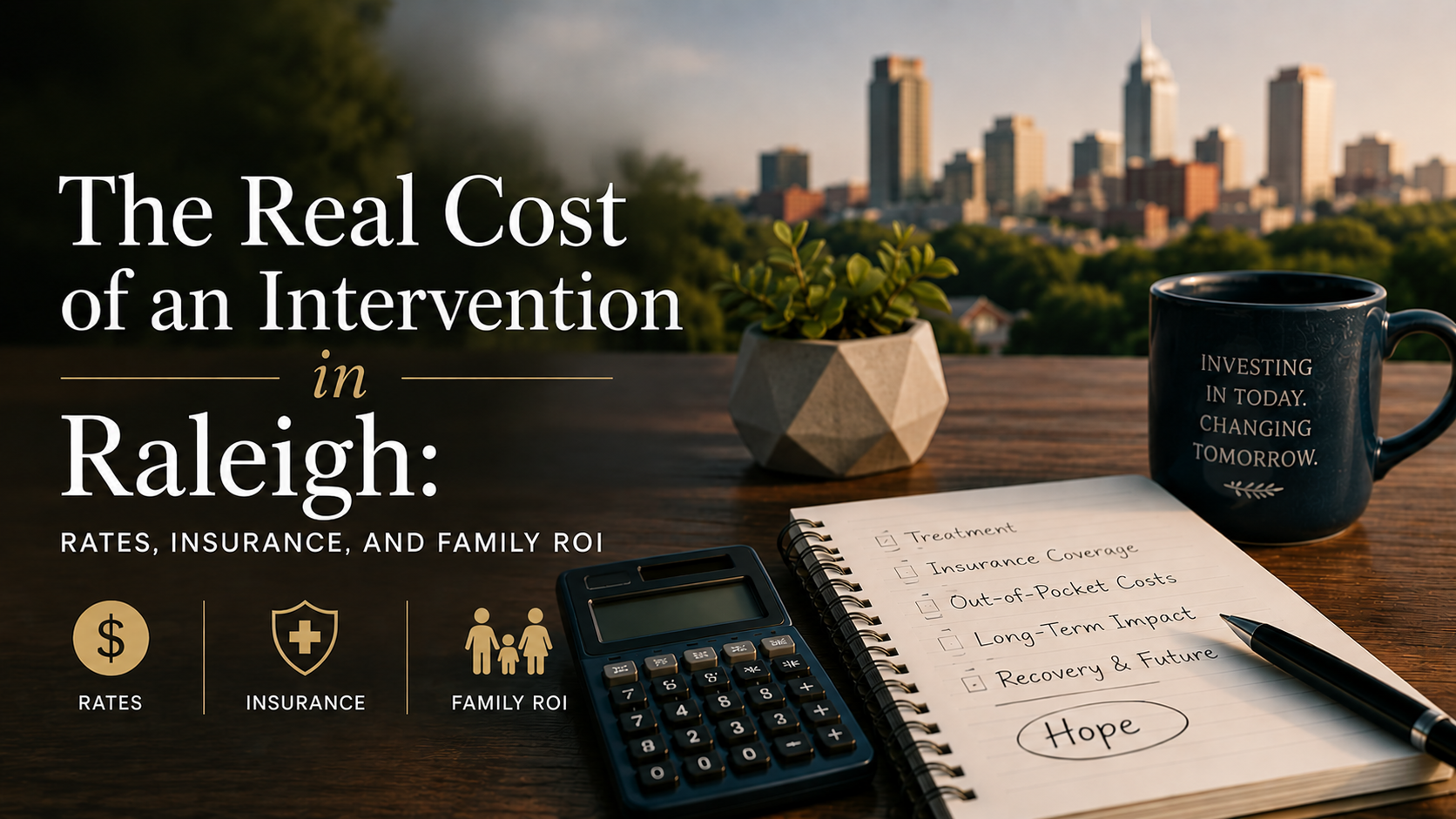
When a family in the Research Triangle reaches the breaking point with a loved one’s addiction, the decision to hire professional help comes with immediate, stressful questions. The most common of which is: How much is this going to cost? When looking to safely navigate a local crisis, retaining a certified drug interventionist in Raleigh ensures your family has a private specialist to manage clinical assessments, the intense dynamics of the day-of meeting, and immediate out-of-network logistics.
Staging a drug or alcohol intervention is a highly specialized, private clinical process. Because it operates outside the traditional corporate rehab structure, understanding how drug intervention costs in Raleigh break down is essential for families preparing to take this critical step.
The Baseline: Wake County Private Practice Rates
Unlike automated national directories or institutional treatment facilities, a solo, certified interventionist operates as a private specialist. In the Raleigh and greater Wake County area, professional fees for a comprehensive intervention typically range from $3,500 to $7,500+.
This fee is rarely just for "the day of the intervention." A professional interventionist retainer generally covers a complete, multi-step clinical envelope:
- Pre-Intervention Family Strategy: Multiple hours of private coaching and boundary-setting for the family circle before meeting with the loved one.
- Clinical Assessment: Reviewing the individual's substance use history to determine the exact level of medical care required.
- The Day-Of Escalation: Managing the high-stress, real-time dynamics of the actual intervention meeting.
- Safe Escort & Seamless Placement: Coordinating immediate, secure transport to a vetted stabilization facility.
Navigating Insurance: Superbills and Out-of-Network Reimbursement
A major point of confusion for North Carolina families is whether health insurance covers an intervention.
The Reality: Private medical insurance policies (like Blue Cross Blue Shield of North Carolina, Aetna, or UnitedHealthcare) almost never pay a private interventionist directly.
Because an intervention is a mobile, family-system service rather than an inpatient medical treatment, it does not fit standard clinical billing codes. However, affluent families can often leverage out-of-network benefits:
- The Retainer / Private Pay Fees: The family pays the interventionist's practice directly to secure the crisis dates.
- The Superbill: Upon completion, the specialist can provide a detailed, itemized medical statement (a superbill) featuring specific clinical diagnostic and service codes.
- Reimbursement: The family submits this superbill to their private insurance carrier to seek partial out-of-network reimbursement for the assessment and family therapy portions of the service.
Factoring in Logistics: Travel and RDU Airport Routing
When calculating the total financial footprint, families must also consider local and regional logistics. If the interventionist must coordinate an out-of-state placement or manage emergency travel, transport logistics become part of the strategy.
For families located Inside the Beltline, North Hills, or the surrounding Research Triangle Park (RTP) region, transport planning is heavily anchored around Raleigh-Durham International Airport (RDU). Total costs may adjust based on whether the specialist must provide long-distance sober escort services to safely transition the loved one from a local Wake County home into an out-of-state detoxification or residential program.
Shifting the Perspective: The True ROI of Family Healing
While the upfront cost of a private specialist can cause temporary hesitation, experienced families measure the expense against a far more dangerous metric: the financial and human cost of doing nothing.
Active addiction inside a family system rapidly drains wealth through legal crises, emergency room visits, destroyed careers, and enabling behaviors. A structured, invitational intervention bypasses months or years of catastrophic downward spiral, delivering an immediate pathway to safety.